 Türkçe
 English
 Deutsch
 Русский
 Español
 Français
 العربية
 فارسی
فارسیQuartz for the Chemical Industry
Quartz is the starting raw material for the great majority of silicon based chemicals; it forms the basis of a broad product family, from sodium silicate to precipitated silica and from silicon carbide to ferrosilicon. Thanks to its chemically inert structure it is also used as packing and support material in reactors and absorption columns. Seyman Maden supplies the chemical industry with washed, dried granular quartz in controlled fractions as well as micronized quartz.
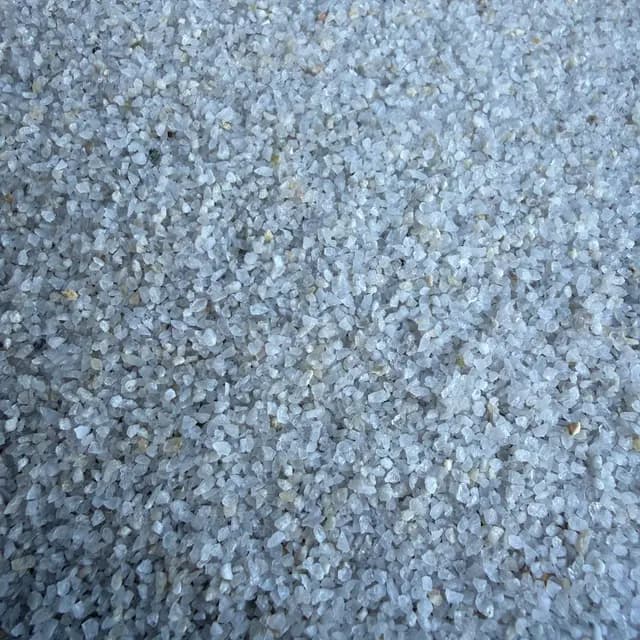
The widespread use of quartz in the chemical industry stems both from its being a pure silicon source and from its chemical durability. Apart from hydrofluoric acid and hot concentrated alkaline solutions, it is resistant to acids and to most industrial chemicals; it does not react and does not release ions into the medium. With a Mohs hardness of 7, a density of 2.65 g/cm³ and a melting point of 1710°C, this mineral keeps its form both at high temperature and in aggressive chemical environments. These properties make quartz usable both as a raw material and as a process material.
The production of sodium silicate, silica gel, precipitated silica and colloidal silica all begins with quartz-sourced silica. In the production of silicon carbide, ferrosilicon and metallic silicon, quartz is processed by reduction at high temperature together with a carbon source. In the production of zeolites, catalyst carriers and synthetic silicates, the purity of the quartz affects the pore structure and the activity of the finished product. Each of these processes calls for a silica source in which the iron, aluminum and alkali contents are kept under control.
Besides its use as a raw material, quartz is also employed as a process material in chemical plants. It is used as inert packing in absorption and neutralization columns, as a support layer in catalyst beds and as bed material in acid lines; both mechanical strength and non-reactivity are sought in these applications. Medium and coarse granular fractions such as 0.7-1.2 mm are generally preferred in column and reactor applications, while micronized quartz is used in filler and coating chemicals. The fraction is selected according to column geometry, flow rate and pressure drop targets.
Main Applications
- Sodium silicate and water glass production
- Precipitated silica, silica gel and colloidal silica
- Silicon carbide and ferrosilicon production
- Zeolite and catalyst carrier production
- Inert packing in chemical reactors and absorption columns
- Bed material in acid and neutralization beds
- Micronized filler in paint, adhesive and coating chemicals