 Türkçe
 English
 Deutsch
 Русский
 Español
 Français
 العربية
 فارسی
فارسیMicronized Quartz for the Paint Industry
In the paint industry, micronized quartz is a functional filler that gives volume and mechanical strength to the resin system. Thanks to its chemically inert structure, high hardness and low oil absorption, it maintains film thickness while increasing resistance to abrasion, scratching and weathering. When the grinding fineness is chosen correctly, both the degree of matting and the surface texture can be brought under control.
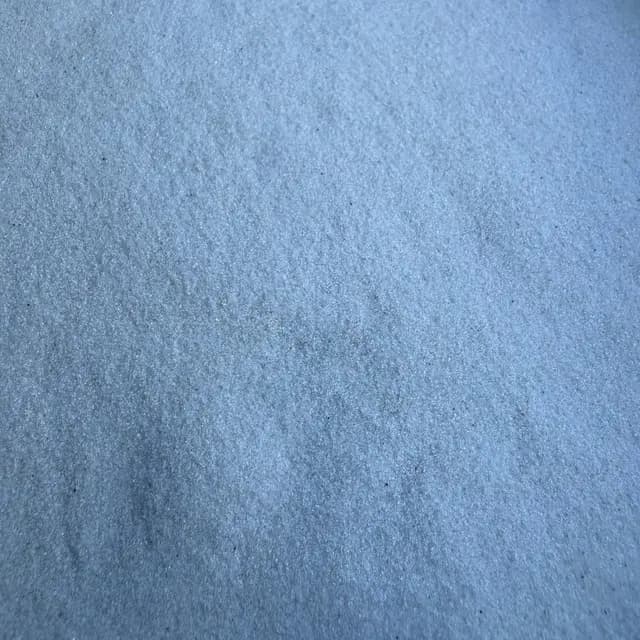
Quartz is one of the most stable minerals found in nature; it is practically unreactive towards acids and alkalis, does not retain water and does not change color over time. The micronized quartz used in paint formulations therefore makes a purely physical contribution without entering into any chemical interaction with the resin. Its structure, with a Mohs hardness of 7, forms a hard skeleton within the dry film and increases the abrasion and scratch resistance of the surface. With a density of 2.65 g/cm³, the mineral disperses evenly within the mix and shows little tendency to settle quickly in storage.
The most distinctive contribution of micronized quartz to a paint formulation is its low oil absorption value. Because it demands less binder than some alternative fillers at the same volume, the formulator can raise the solids content while keeping viscosity under control. This means a higher film thickness in a single coat, better support for hiding power and a favorable cost balance. As the grinding fineness increases, surface gloss and fullness increase, while coarser fractions are preferred for matte, textured and anti-slip surfaces.
In demanding fields of use such as exterior facade paints, industrial protective coatings and floor paints, the stability of quartz against weather conditions comes to the fore. It does not degrade under UV radiation, is unaffected by moisture and freeze-thaw cycles, and contributes to the formation of a dense structure that limits water transport through the film. The important point in tinted systems is the color stability of the quartz itself: produced at a high SiO₂ purity and a low iron content, the product does not cause color deviation in light and pastel shades. Since the purity and fineness required in paint applications vary from product to product, the fraction and purity are defined together according to the needs of the formulation.
Main Applications
- Exterior facade and facade protective paints
- Industrial protective coating systems
- Floor and epoxy based paints
- Traffic and road marking paints
- Powder coating formulations
- Wood filler primers and varnish systems
- Decorative textured plasters and coatings