 Türkçe
 English
 Deutsch
 Русский
 Español
 Français
 العربية
 فارسی
فارسی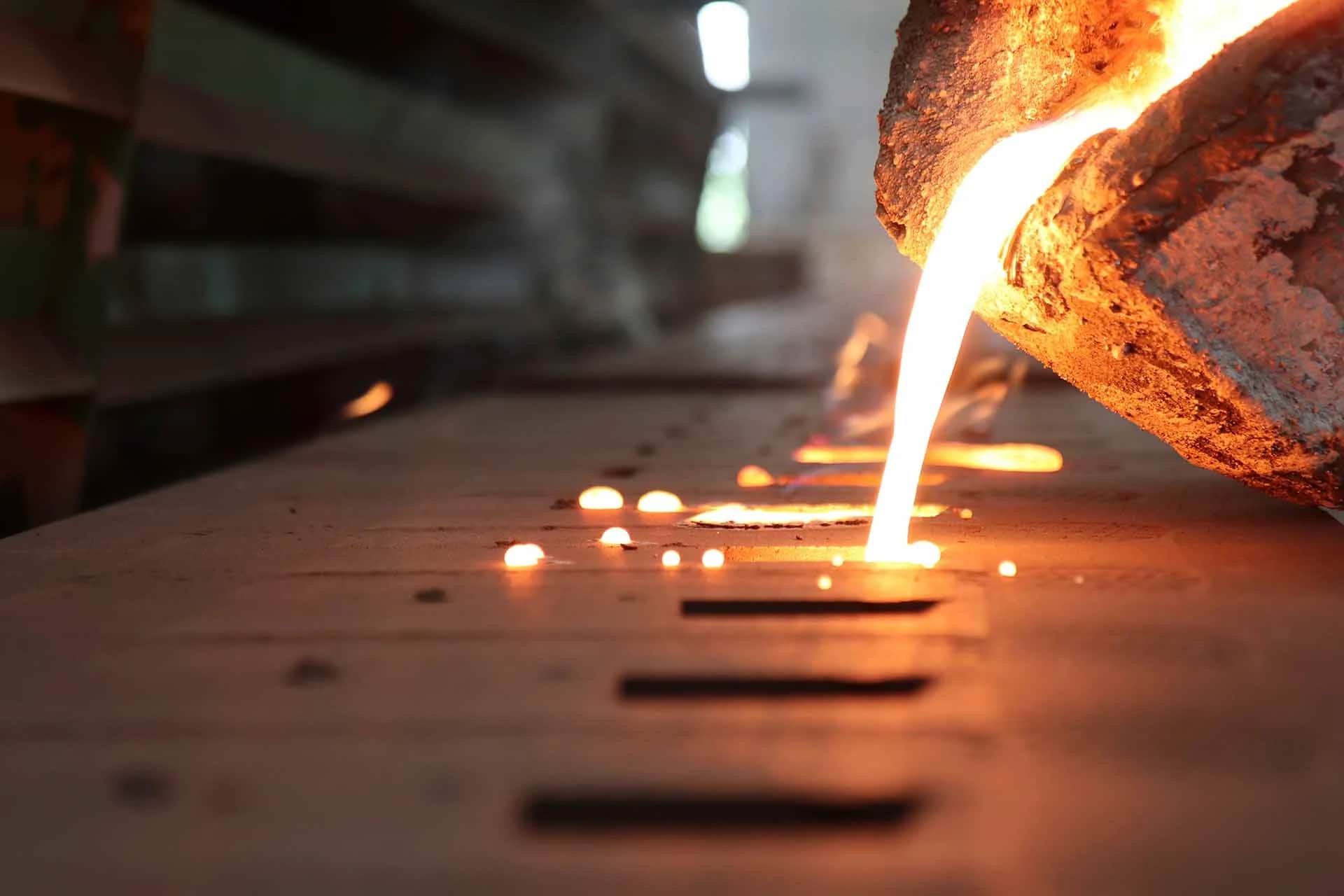
Foundry sand is a specially processed, high-temperature-resistant type of silica sand used to make molds and cores in metal casting operations. Foundry sand is the basic raw material of the molds prepared so that molten metal (iron, steel, aluminum, brass, bronze) can take a specific form.
Foundry sand is prepared from a mixture of silica sand (85-95%) + binder (clay, resin, or silicate) + water. Able to withstand temperatures up to 1,500 °C, foundry sand is an indispensable material for the modern automotive, machinery, aerospace, and art industries.
Quick Fact: In more than 95% of Turkey's annual casting output, a foundry-sand-based molding method is used.
Properties of Foundry Sand
Physical Properties
- High refractoriness (above 1,500 °C)
- Suitable grain size (0.1-0.8 mm, AFS 40-80)
- High permeability
- Sufficient strength and plasticity
Chemical Properties
- SiO₂: 95%+
- Iron oxide: Below 0.5%
- Clay: 3-12% (green sand)
- Moisture: 2-5%
Types of Foundry Sand
1. Green Sand
It is a mixture of silica + bentonite + water. It is economical, reusable, and fast. It is preferred for iron, steel, brass, and aluminum casting.
2. Dry Sand
It is the oven-baked form of green sand. It provides higher strength. It is used for large and complex parts.
3. Resin-Bonded Sand
It is a type of sand bonded with synthetic resin that provides high precision. It is preferred for automotive and precision machine parts.
4. Sodium Silicate (Water Glass) Bonded Sand
It is hardened with CO₂. It is used in medium-to-large casting operations.
5. Core Sand
It is used to form the internal cavities of the cast part.
6. Jewelers' Foundry Sand
A very fine-grained sand (0.1-0.3 mm) specially prepared for gold/silver/platinum casting.
How Is Foundry Sand Prepared?
- Raw material selection — high SiO₂, low iron oxide
- Mixing — a typical green sand recipe: 88-92% silica sand, 5-10% bentonite, 3-5% water, 1-3% coal dust
- Maturing — resting for 2-4 hours
- Testing — permeability, strength, moisture, AFS
- Molding
- Reuse — it is screened, cooled, and reprocessed
Foundry Sand Grain Sizes (AFS Grit)
| AFS No. | Grain Size | Surface Quality | Use |
|---|---|---|---|
| AFS 40 | 0.4 - 0.5 mm | Coarse | Large castings |
| AFS 50 | 0.3 - 0.4 mm | Medium | General casting |
| AFS 60 | 0.2 - 0.3 mm | Good | Automotive |
| AFS 80 | 0.15 - 0.2 mm | Very good | Precision casting |
| AFS 100+ | 0.1 - 0.15 mm | Excellent | Jewelers, jewelry |
Which Foundry Sand for Which Metal?
| Metal Cast | Recommended Sand | Grain Size |
|---|---|---|
| Pig Iron | Green sand | AFS 50-60 |
| Steel | Resin-bonded sand | AFS 40-50 |
| Aluminum | Fine green sand | AFS 60-80 |
| Brass / Bronze | Fine green sand | AFS 60-80 |
| Gold / Silver | Jewelers' sand | AFS 100+ |
Foundry Sand Prices (2026)
Prices vary according to grain size (AFS), purity, packaging, and delivery location. Influencing factors: SiO₂ content, grain uniformity, washed/unwashed, packaging, shipping distance, and order quantity.
For wholesale foundry sand prices, get a current quote from our contact page.
What to Consider When Choosing Foundry Sand
- The AFS value should suit the part
- Iron oxide below 0.5%
- Clay 5-10% (green sand)
- Moisture 2-5%
- A permeability test should have been carried out
- Strength should be sufficient
- The supplier should be able to provide quality certificates
Frequently Asked Questions
How many times can foundry sand be used?
With proper maintenance, green sand can be used 20-50 times. Resin-bonded sands are generally single-use, but 80-90% can be recovered through regeneration.
Can foundry sand be prepared at home?
It can be prepared for small hobby castings; for professional and precision castings, standardized foundry sand should be used.
Is jewelers' foundry sand different?
Yes, it is much finer grained (AFS 100+) and contains a special binder. It allows fine details to be cast without distortion.
What is the difference between silica foundry sand and the others?
Silica foundry sand is the most common and economical. The alternatives are zircon, chromite, and olivine sand.
Is foundry sand harmful to health?
It is harmless through contact. Prolonged inhalation of dust can cause silicosis; a mask, gloves, and ventilation are mandatory.
Conclusion
Foundry sand is the fundamental raw material of the modern metal casting industry. Choosing the right AFS value, suitable purity, and a quality binder determines your production efficiency and product quality.
As Seyman Maden, we wholesale the foundry sand types you need for iron, steel, aluminum, brass, and jewelry casting. AFS analysis is carried out in our laboratory. For a product and price quote specific to your industry, get in touch with us.