 Türkçe
 English
 Deutsch
 Русский
 Español
 Français
 العربية
 فارسی
فارسی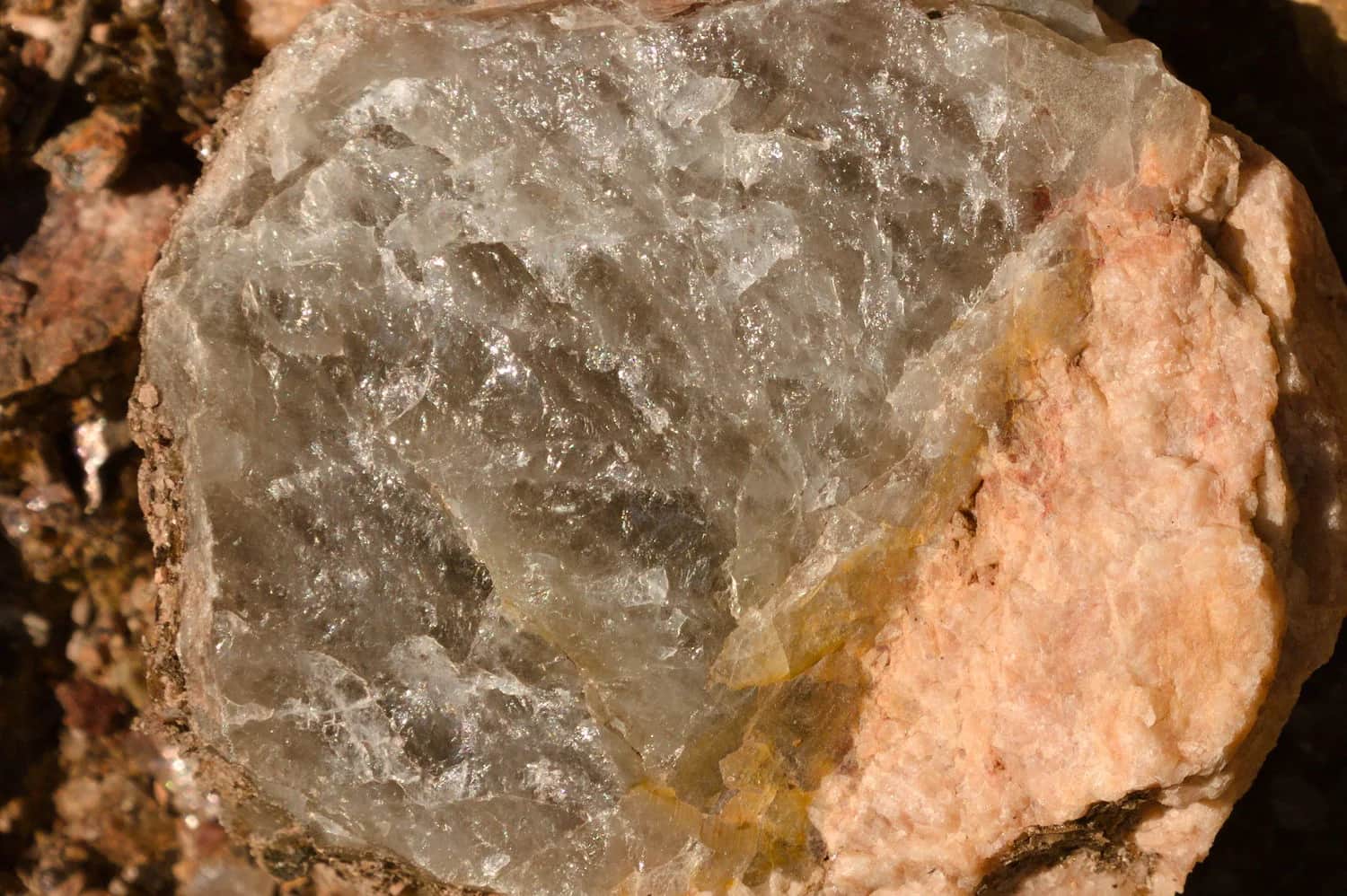
Quartz sand is a high-purity silicon dioxide industrial raw material formed when quartz (SiO₂) crystals, one of the most abundant minerals in nature, break down through millions of years of natural weathering.
Typically containing 98% or more SiO₂, quartz sand is an indispensable material for the glass, electronics, optics, and precision casting industries thanks to its hardness, chemical resistance, and high melting point.
Important: Quartz sand and silica sand are chemically the same material. The main difference between them lies in their degree of purity and grain size characteristics.
What Is the Difference Between Quartz Sand and Silica Sand?
| Property | Quartz Sand | Silica Sand |
|---|---|---|
| Chemical Structure | SiO₂ | SiO₂ |
| Purity (SiO₂) | 98% - 99.9% | 90% - 98% |
| Iron Oxide | 0.01% - 0.05% | 0.1% - 0.5% |
| Color | White, transparent | Cream, yellowish, white |
| Grain Structure | More angular and hard | More rounded |
| Use | Precision manufacturing, electronics, optics | Construction, blasting, filtration |
| Price | More expensive | More economical |
Summary: All quartz sands are silica, but not all silica sands are quartz sand. Silica sands with high purity and a low iron oxide content are called quartz sand.
Properties of Quartz Sand
Chemical Properties
- SiO₂: 98% - 99.9%
- Fe₂O₃: 0.01% - 0.05%
- Al₂O₃: 0.1% - 0.5%
- Resistant to all acids except hydrofluoric acid
- pH neutral
Physical Properties
- Mohs hardness: 7
- Density: 2.65 g/cm³
- Melting point: 1,713 °C
- Color: Clear / white / opaque
- Crystal structure: Hexagonal
- Water absorption: Below 0.5%
Where Is Quartz Sand Used?
Thanks to its high purity, it is preferred in industries that require precision manufacturing:
- Optical glass and lens production — microscopes, binoculars, camera lenses
- Electronics and semiconductor industry — silicon chips, phones, solar panels
- Precision glass production — borosilicate, crystal, low-iron flat glass
- Precision casting — jewelry, dental implants, aerospace parts
- Refractories — blast furnace inner lining
- Fiberglass and fiber optics
- Paint, coating, and composite industry
- Blasting — precision surface treatments
- Quartz surface and countertop production — composite surfaces
- Precision water filtration — pharmaceutical and food industries
Where Is Quartz Sand Found in Turkey?
Turkey is one of the world's leading countries in terms of quartz sand reserves.
- Tekirdağ (Şarköy, Saray): The highest-quality quartz sand
- Bilecik (Söğüt, Bozüyük): Industrial quartz sand
- Eskişehir: Glass- and ceramic-grade
- İstanbul (Şile): For the glass industry
- Manisa - İzmir: Construction and general use
Types of Quartz Sand
| Type | Grain Size | Use |
|---|---|---|
| Very Fine | 0.1 - 0.3 mm | Optics, electronics |
| Fine | 0.3 - 0.6 mm | Glass, precision casting |
| Medium | 0.6 - 1.2 mm | Filtration, aquariums |
| Coarse | 1.2 - 3 mm | Construction, drainage |
Quartz Sand Prices (2026)
Prices vary according to degree of purity, grain size, packaging, and delivery location. As purity increases, the price rises: standard (98% SiO₂) is economical, high purity (99%+) is the mid segment, and ultra-high purity (99.9%) is the premium segment.
For wholesale quartz sand prices, request a quote from our contact page.
Frequently Asked Questions
Which is better, quartz sand or silica sand?
It depends on your intended use. Quartz sand is best for precision manufacturing (electronics, optics, crystal glass), while silica sand is sufficient for general construction and industrial applications.
Where is quartz sand used at home?
It can be used at home in aquariums, decorative glass vases, garden drainage, and art projects.
Is quartz sand harmful?
As a natural mineral, quartz sand is harmless through contact. However, prolonged inhalation of its dust can cause silicosis; a mask should be worn in industrial environments.
In which colors does quartz sand come?
Pure quartz sand is clear, white, or has a broken-glass appearance. Iron oxide gives it a yellowish tint, while manganese produces pink-purple tones.
Is quartz sand sold washed?
Yes, for precision applications quartz sand is sold washed, screened, and dried.
Conclusion
Quartz sand is a special, high-purity silica sand. It is an indispensable raw material for the glass, electronics, optics, and quartz surface industries. Supplied at the right purity and grain size, quartz sand directly determines your production quality.
As Seyman Maden, from our facility in the Thrace region we offer a wide product range spanning standard silica sand to high-purity quartz sand. For a product and price quote suited to your needs, get in touch with us.